Decarbonization and a Recycling-based Society
Protecting Biodiversity
- Responses to the TNFD (Biodiversity)
- Initiatives aimed at reducing marine plastic litter
- PASCO’s support for sustainable forest management
- Participation in local social contribution activities
- Dealing with illegal logging
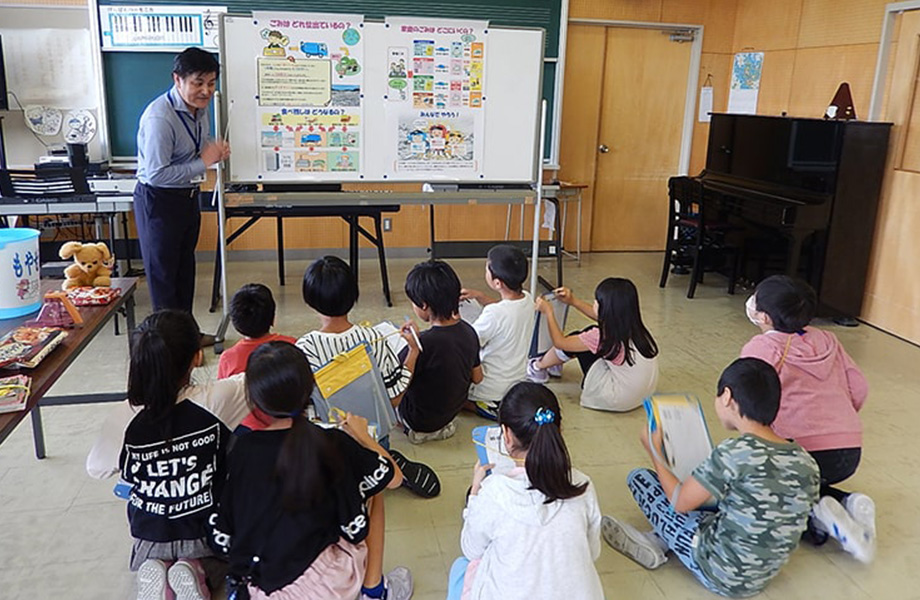
- Initiatives for raising awareness of biodiversity protection
Responses to the TNFD (Biodiversity)
In accordance with the LEAP approach*, recommended by the Taskforce on Nature-related Financial Disclosures (TNFD), we identified priority locations and assessed risks and opportunities from the two perspectives of how our business depends on nature and how it impacts the environment.
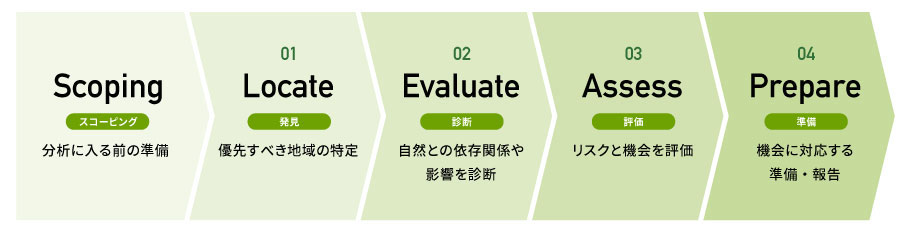
* LEAP approach: A method for assessing and managing nature-related issues developed by the TNFD, consisting of Scoping (preparation before proceeding with full-scale analysis) and the following four steps: Locate (discovering our interface with nature across the entire supply chain and identifying priority locations), Evaluate (evaluating the nature-related dependencies and impacts of our business activities), Assess (assessing material risks and opportunities based on the evaluation results), and Prepare (preparing to respond to and report on nature-related risks and opportunities).
Scoping
As preparation before embarking on the LEAP approach, we built hypotheses about potentially important activities in terms of nature-related dependencies, impacts, risks, and opportunities in our business activities, and considered the scope of our analysis. This approach enabled us to identify the business activities that require focused analysis and to understand nature-related issues important to SECOM.
Emergency response personnel who provide security services are required to undergo training as stipulated in the Security Services Act. In response, SECOM maintains its own facilities to conduct a wide variety of training programs throughout the year. We have established three training facilities to serve our nationwide network of offices. We know that training is indispensable for our business activities, and the training facilities that support this policy are key elements. Since the construction of our training facilities involves land alteration, we identified this as one key factor for analysis.
Locate/Evaluate
Among the training facilities studied during Scoping, the SECOM HD Center Gotemba was identified as having a particularly deep interface with nature. The building is equipped with energy-saving and energy-generating equipment and has obtained Nearly ZEB certification, providing a comfortable training environment while being environmentally friendly. Furthermore, to reduce the impact on the surrounding natural environment that was disturbed during construction, we selected native species for planting and used wood chips as a readily biodegradable material in some areas.
However, as the facility is located near Mt. Fuji, a World Heritage Site, it has been designated a Key Biodiversity Area under the WWF Biodiversity Risk Filter*. We thus recognize the importance of prioritizing activities to restore biodiversity thought to have been lost during construction.
WWF Biodiversity Risk Filter: A diagnostic tool for biodiversity-related risks developed by the World Wide Fund for Nature (WWF)
Alongside rainwater used for toilet flushing, SECOM HD Center Gotemba relies on tap water for other purposes. Tap water here is sourced from abundant deep groundwater and spring water around Mt. Fuji, Mt. Tanzawa and Mt. Hakone ranges, making training activities dependent on surrounding forest resources.
For these reasons, we have identified the SECOM HD Center Gotemba as a training facility with a particularly deep interface with nature. We are also preparing to screen other facilities to determine whether they are located in areas of high biodiversity importance, while analyzing their interface with biodiversity across the entire supply chain.
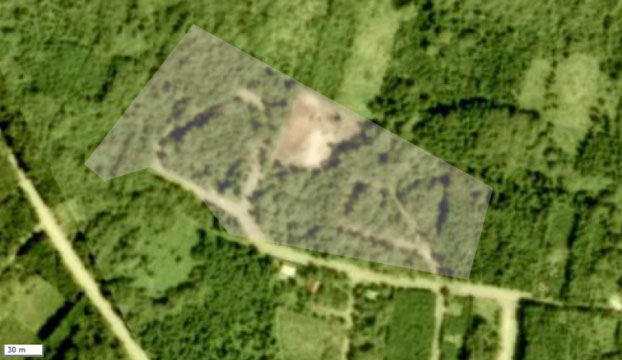
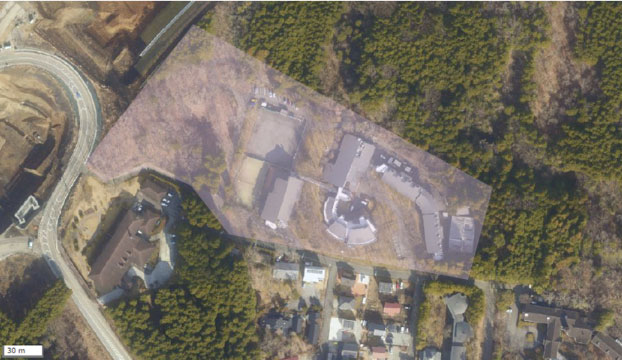
Source: Geospatial Information Authority of Japan website(地理院地図 / GSI Maps | 国土地理院), created by SECOM based on this source.
Water risk assessment
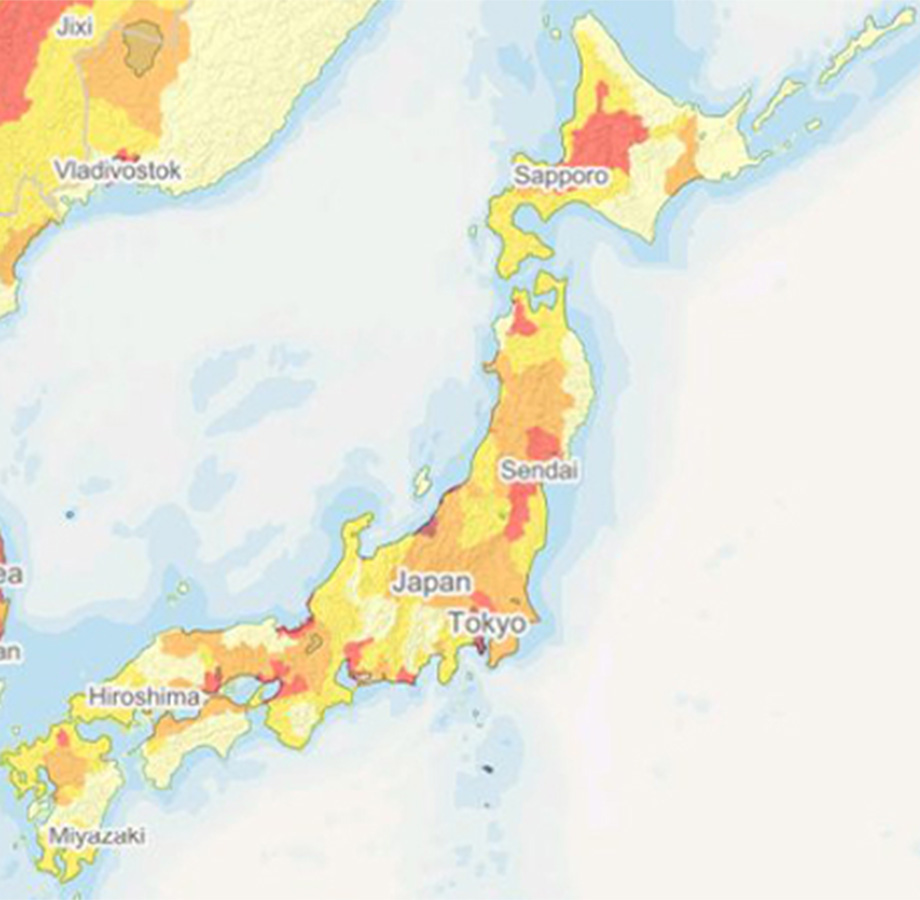
We mainly use water for office pantries, toilet flushing, and cooling water for building air conditioning. As we do not require a large amount of water for our business activities, we consider it a low priority. However, since there is a growing risk of water damage due to climate change, we conduct regular risk assessments for Group companies and the major suppliers that we contract to manufacture our main security devices, preparing countermeasures for every possible risk.
We use the WRI Aqueduct* evaluation method to perform water risk summary analyses and regularly check the water risk in the areas where our businesses are located. When we set up offices, we select locations that are less likely to be flooded based on internal standards. For example, we are taking measures to withstand a storm surge of 8 meters at a SECOM group company building located in the coastal part of Tokyo.
* WRI Aqueduct: A water risk assessment tool developed by the World Resources Institute (WRI)
Assess
Based on the priority locations identified in the Locate step and the dependencies and impacts discovered in the Evaluate step, we conducted a scenario analysis to assess the potential nature-related risks and opportunities that could impact the Company.
For the SECOM HD Center Gotemba, we consider the depletion of groundwater resources a physical risk, which WRI Aqueduct currently classifies as having a moderate drought risk. However, if a drought were to occur due to fluctuations in annual precipitation caused by future climate change, groundwater demand may increase while its natural replenishment declines, leading to resource depletion.
In addition, deforestation in the mountains that serve as water sources could reduce groundwater levels, which in turn may lead to restrictions on water use during training or, in some cases, water becoming unavailable. As a result, holding training sessions at the SECOM HD Center Gotemba would become difficult, which could lead to a decline in the quality of our services.
Prepare
SECOM aims to regenerate 100 hectares of coniferous and broad-leaved mixed forest by participating in the Mt. Fuji Reforestation Project, led by OISCA (the Organization for Industrial, Spiritual and Cultural Advancement-International). These activities will help unify and manage the expansive forest area, enabling us to fully perform our public function and contribute to the restoration of biodiversity that was thought to have been lost during construction. With Mt. Fuji also serving as one of our water resources, we view reforestation as an important activity.
Use of ENCORE to analyze our interface with nature
To examine SECOM’s interface with nature in our business activities, we used ENCORE* to analyze the nature-related dependencies and impacts of the sectors where we operate.
Our security systems service activities have a low dependency on “local climate regulation services” and have a potentially moderate impact on land use. Going forward, we will continue to use various tools to assess the relationship between our business activities and nature.
* ENCORE (Exploring Natural Capital Opportunities, Risks and Exposure): A nature-related risk assessment tool developed by the Natural Capital Finance Alliance (NCFA) and others
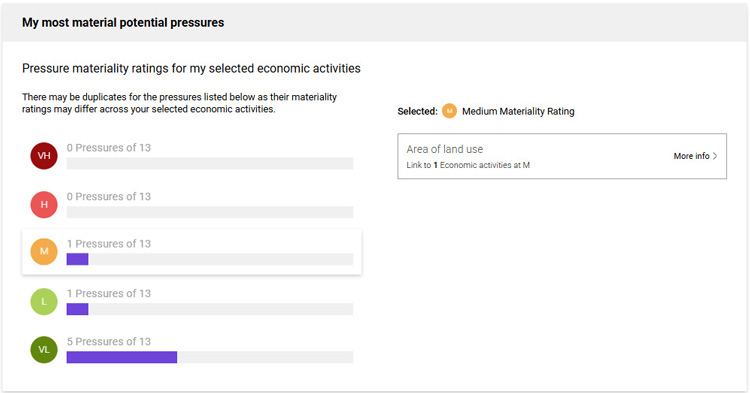
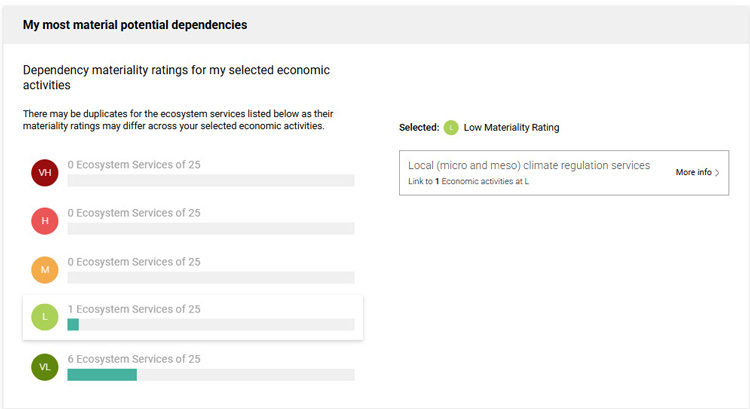
Source: ENCORE Partners (Global Canopy, UNEP FI, and UNEP-WCMC) (2025). ENCORE: Exploring Natural Capital Opportunities, Risks and Exposure. [On-line], [September 2025], Cambridge, UK: the ENCORE Partners. Available at: https://encorenature.org DOI: https://doi.org/10.34892/dz3x-y059
License: CC BY-SA 4.00 *Only ENCORE figures and charts are covered by this license; the entire report is not included under this license.
Initiatives aimed at reducing marine plastic litter
Marine plastic litter causes a variety of problems, such as negatively impacting the oceanic environment and interfering with coastal functions. Concerns are especially high about the effects of microplastics on ecosystems, including those for humans. In recent years, the marine plastic problem has come to be regarded as a pressing global issue.
The Japanese government has formulated the “Resource Circulation Strategy for Plastics” and the “National Action Plan for Marine Plastic Litter,” enacted the “Plastic Resource Circulation Act,” and, at the G20 Osaka Summit, held in June 2019, proposed reducing additional pollution from marine plastic litter to zero by 2050, under the “Osaka Blue Ocean Vision.” Through these actions, the Japanese government has demonstrated its commitment to solving the problem of marine plastic litter.
In 2022, SECOM formulated the long-term target of eliminating the use of plastics derived from fossil resources in containers and packaging by 2045. Going forward, we will work to avoid the use of plastics derived from fossil resources in containers and packaging of our equipment, and to actively use plant-derived plastics or paper packaging instead, thus contributing to solving this social issue.
Targets for reducing marine plastic litter
Long-term targets
- Eliminate the use of plastics derived from fossil resources in containers and packaging by 2045
Medium-term targets
- Eliminate the use of virgin plastics derived from fossil resources in containers and packaging by fiscal 2030
PASCO’s support for sustainable forest management
Supporting the appropriate management of forest resources
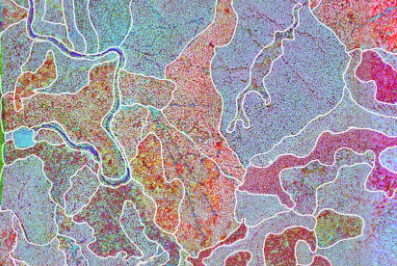
PASCO CORPORATION, a SECOM Group company, uses aerial laser measurements to collect high-precision 3D topographical data, which it utilizes in forest resource studies. These studies make it possible to assess, in a short time, the amount and condition of forest resources over a wide area, as well as the geographical factors that affect production activities.
However, making improvements to forests involves work that must have the consent of the forest owners. This requirement makes it essential to confirm forest borders and owners. The average age of forest owners is rising and there are more forests whose ownership cannot be determined. Therefore, clearly determining forest borders has become an urgent task.
To address this issue, PASCO is assisting with the clarification of borders by creating methods that clearly identify forest borders by utilizing airborne measurement data and gain consent for border finalization without actually entering the forest.
PASCO will continue to leverage various cutting edge technologies to visualize forest resource information and provide support for sustainable forest management, thereby enabling forests to fulfill their various functions, while contributing to the protection of biodiversity.
Participation in local social contribution activities
Reforestation activities at Mt. Fuji
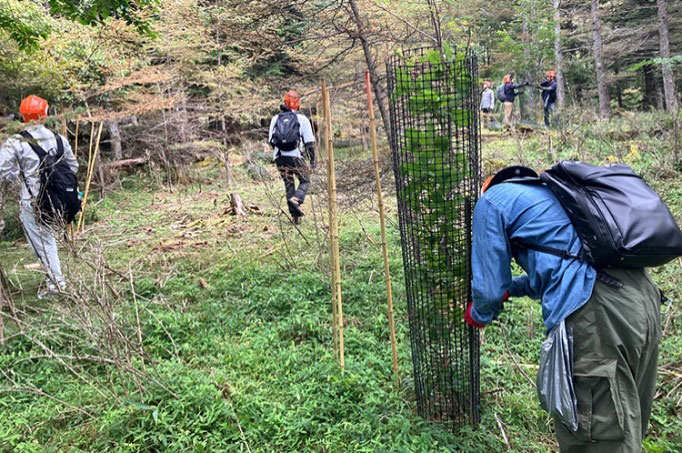
In some forests at the foot of Mt. Fuji, which was designated a World Heritage Site in 2013, the rich forests and ecosystems are being damaged by insect infestations and other threats. To preserve Mt. Fuji’s natural beauty for future generations, the SECOM Group is working to restore biodiversity by participating in the “Mt. Fuji Reforestation Project,” led by OISCA (the Organization for Industrial, Spiritual and Cultural Advancement-International) as a volunteer.
In August 2025, SECOM held the first event with Yamanashi Prefecture officials and foresters to carry out reforestation work, including repairing animal-protection netting to safeguard seedlings and pruning trees. While some trees grew healthy and strong, others were downed by wind or snow, demonstrating the importance of forest management. Facing the challenges and necessity of reforestation, which our employees rarely encounter in their regular duties, raises their environmental awareness and strengthens their ties with the local community.
SECOM will continue to work with local governments and communities to carry out initiatives that place importance on harmonious coexistence with nature.
Participation in activities to regenerate coastal disaster-prevention forests
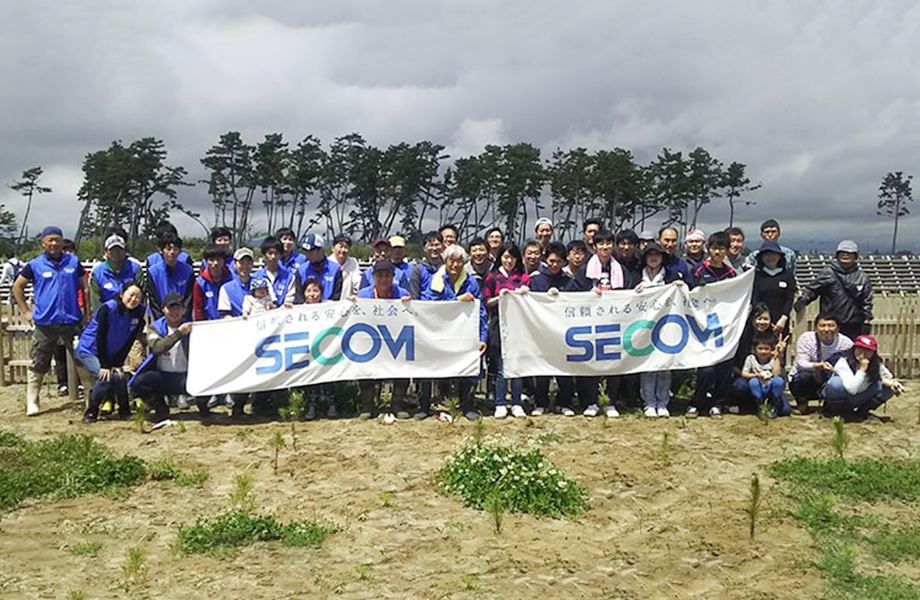
The SECOM Group endorses biodiversity protection activities organized by NPOs and local communities, and our employees volunteer in activities such as the Coastal Protection Forest Restoration Project.
The Coastal Protection Forest Restoration Project, which is being carried out in Natori City, Miyagi Prefecture, is an initiative organized by OISCA (The Organization for Industrial, Spiritual and Cultural Advancement-International) and the Natori City Coastal Forest Restoration Association to rehabilitate coastal disaster-prevention forests covering approximately 100 hectares (5 km in length) that were lost in the Great East Japan Earthquake tsunami. The activities are contributing to reconstruction after the earthquake and to the recovery of the habitat for small animals and birds.
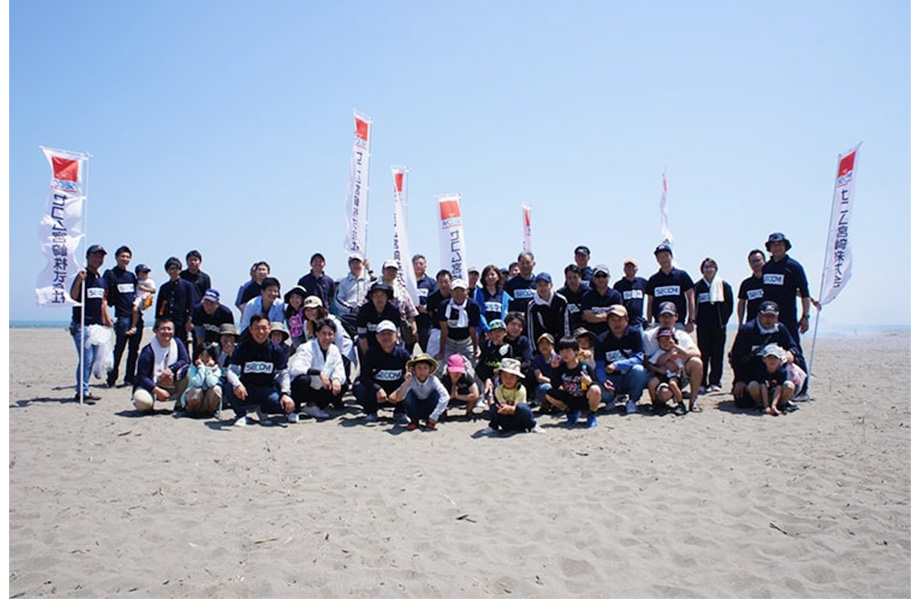
In addition, our Group companies are involved in various environmental conservation activities. For example, SECOM Miyazaki Co., Ltd. participates in cleanup of loggerhead turtle spawning grounds at Akae and Kisaki beach of Miyazaki Prefecture.
Dealing with illegal logging
Illegal logging of forests is recognized as an important global issue. In Japan, the Act on Promoting the Distribution and Use of Legally Harvested Wood and Wood Products (Clean Wood Law) went into force in 2017.
We recognize that addressing illegal logging is an important issue and conduct a questionnaire survey for suppliers to eliminate illegally harvested timber products such as imported timber.
In addition, we use FSC-certified paper for our printer paper, SECOM reports, product catalogs, and envelopes, etc., to preserve valuable forests.